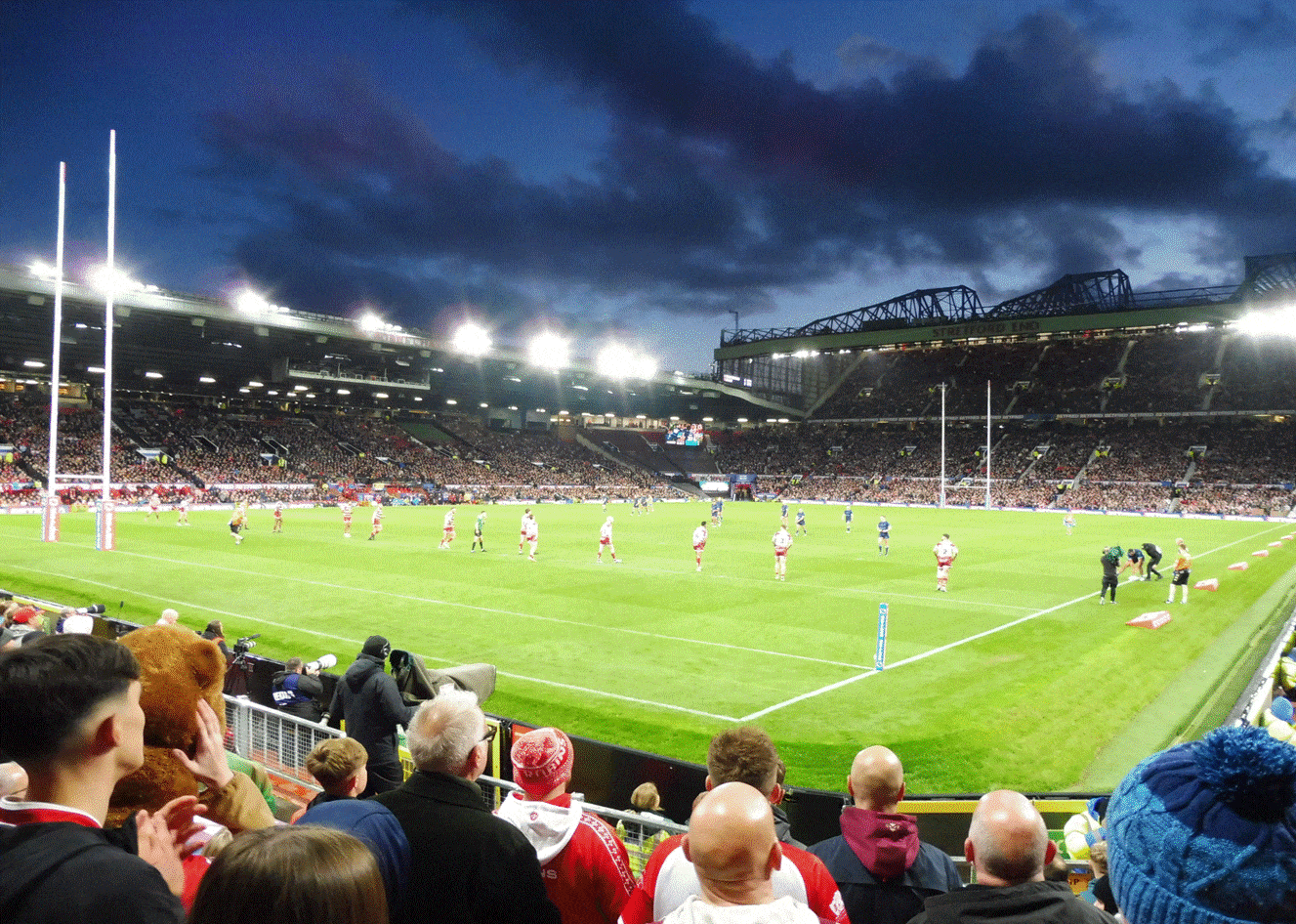
At Dublin’s roaring Aviva Stadium, the power-play of the decade unfolded: France, with a jaw-dropping 7-1 bench split, upended Ireland’s bid for Six Nations glory with a late-game onslaught. The sheer dominance of this formation—a blend of innovation, risk, and brute strength—has sparked debate across the Rugby Union landscape. Is the 7-1 split a masterstroke in Rugby strategy or a threat to the heart of the game? Unpacking how this bold game plan dismantled even the most robust defense, we enter rugby’s new era where balance, tradition, and tactical revolution collide.
The 7-1 Split: Redefining Rugby Strategy and Team Dynamics
At its core, the 7-1 split is a radical Rugby strategy, allocating seven replacement forwards and just a single back on the bench. Traditionally, the game plan favored more backs for flexibility in attack and coverage in defense. However, Rugby Union’s recent giants—South Africa and, most recently, France—have weaponized this split to unleash unmatched physical dominance late in the game.
The shift didn’t come overnight. For years, teams dabbled with the 6-2 split, searching for fresh legs in the pack while maintaining enough backs to manage injuries and tactical fluidity. But as seen in pivotal matches such as Ireland’s recent Six Nations clash, the 7-1 split has now arrived on the main stage, revolutionizing team formation and positioning in Rugby Union.
- Scrum Power: A new, full-strength pack can dominate tired opposition, winning territory and crucial penalties.
- Momentum Shift: Nearly 50% of the team refreshed at once can turn tight contests into runaways, as France’s 34-point blitz against Ireland proved.
- Defensive Wall: Late-game defense becomes fiercer; gain-line stands are bolstered with relentless, fresh muscle.
| Bench Composition | Description | Example Teams |
|---|---|---|
| 5-3 | Traditional balanced approach | England, Scotland |
| 6-2 | Extra forward for late power | South Africa, France (previously) |
| 7-1 | Maximum forward impact, single back cover | South Africa, France (2025 Six Nations) |

The evolution of Rugby’s bench is not just about numbers—it’s about exploiting every facet of team positioning and exploiting the smallest weaknesses in opposition defenses.
Explosive Power Versus Tactical Flexibility in Rugby Union
Every Rugby team using the 7-1 split chases one prize: overwhelming physical superiority. It’s a formation designed to bring in a new wave of forwards who can crush set-pieces, dominate in tight exchanges, and suffocate the opposition’s attack and defense, especially in the closing stages.
- Game-changing scramble defense from fresh back-rowers
- Massive mauls and scrum pushes in the dying minutes
- Relentless counter-rucking to steal possession
| Advantage | Effect on Game | Recent Example |
|---|---|---|
| Scrum dominance | Penalty opportunities, psychological edge | Saints vs Chiefs |
| Breakdown supremacy | Increased turnovers, slower opposition ball | France’s late surge vs Ireland, 2025 |
| Fatigue management | Fewer missed tackles, stronger carries late on | SA A team for Bristol clash |
While these advantages are electrifying, the strategy also means relying on the versatility of certain backs and sometimes even asking a forward to fill an unfamiliar backline positioning. The scrum-half’s role, in particular, can become stretched—a single injury can leave a team dangerously exposed.
Game Plan Risks and Reactions: The 7-1 Split Backlash
Not every coach or Rugby Union traditionalist celebrates the 7-1 split. The approach divides opinion in Rugby for several reasons. First, it places immense pressure on fitness and durability in the backline—one injury could unravel an entire defense and attack structure. Second, the split is sometimes viewed as sacrificing tactical nuance for brute strength, risking the artistry and kick-based game plan that brought Rugby Union global fame.
Coaches like Scotland’s Gregor Townsend have pointed out the inherent risks and philosophical challenges. If a center is injured, a flanker might have to cover the backs—often with shaky results. The evolution towards power-heavy benches also raises debate on whether Rugby’s traditional balance will be lost.
- Possible mismatch in the backline with a forward out of position
- Reduced creative attack when playmakers get injured
- Lower adaptability in live-game tactical changes
| Risk | Potential Impact | Case Study |
|---|---|---|
| Injury to key back | Defensive fragility, slower attack tempo | Scotland vs. New Zealand |
| Fatigue in the remaining back | Poor positioning, drop in communication | Scotland team to face England |
| Tactical inflexibility | Inability to match unorthodox opposition moves | Saints host Saracens |
But with success stories piling up, many teams are nevertheless drawn to the gamble—betting on their forwards to crush adversaries and dictate the pace.
Bench Split Evolution: Rugby Union’s New Tactical Arms Race
A striking evolution emerges: from the era where the front row was king to the current Rugby landscape, where every position is a hybrid of power, skill, and endurance. The 7-1 split reflects coaching trends exploring ever-more specialized athletic profiles and game plans.
- Liam Williams’ versatile full-back play for Ospreys highlights demands on modern backs (see Ospreys Derby).
- Tight-heads like Uini Atonio emerge as both scrummagers and ball carriers.
- Back rows with the agility needed for defensive cover and the power for offensive set-pieces.
| Era | Front Row Focus | Recent Trends | Key Example |
|---|---|---|---|
| Pre-1995 | Pure scrummaging, raw muscle | Little mobility demanded | Classic rugby tours |
| 1995–2015 | More mobile, mixed skills | Rise of “loose forwards” in the front row | Professional Rugby dawn |
| 2015–Today | Hybrid power-mobility, bench split tactics | Specialization for set-pieces and fatigue management | 7-1 split in Six Nations 2025 |
This year’s historic French 7-1 split and the Springboks’ continued innovation force every competitor to rethink both their bench and their in-game team strategy.
Is the 7-1 Split Here to Stay? The Future of Rugby Formation and Game Plans
As the Rugby arms race accelerates, the 7-1 split stands as both a statement of intent and a point of controversy. Supporters argue that it’s simply the evolution of high-stakes Rugby Union, maximizing every possible advantage in team formation and game plan execution.
- Will World Rugby legislate to enforce more balanced benches?
- Can backs continue to adapt to these new demands, or will player safety suffer?
- Does pure physical dominance risk crowding out tactical flair and skill?
| Potential Development | Impact on Rugby | Who Benefits? |
|---|---|---|
| Bench regulation | Restores traditional balance, more backline cover | Defensive-minded teams |
| Increased split innovation | Forwards get bigger roles, set-piece becomes vital | Physical teams with depth |
| Player position hybridization | Versatile utility backs and forwards gain prominence | Clubs like Northampton Saints (see Saints vs Munster) |
No matter which direction the sport evolves, game plan innovation and the relentless pursuit of every edge ensure Rugby Union remains in dynamic transition—always thrilling, forever unpredictable.
It refers to a bench with seven replacement forwards and just one back, maximizing power in the pack at the risk of backline coverage issues.
The intense physicality and set-piece focus of modern Rugby Union have pushed teams to seek late-game dominance through fresh forwards.
Increased risk if a back gets injured, as well as potential loss of tactical flexibility and defensive vulnerabilities.
South Africa’s Springboks and, more recently, France in the Six Nations have made headlines for their impactful use of this strategy.