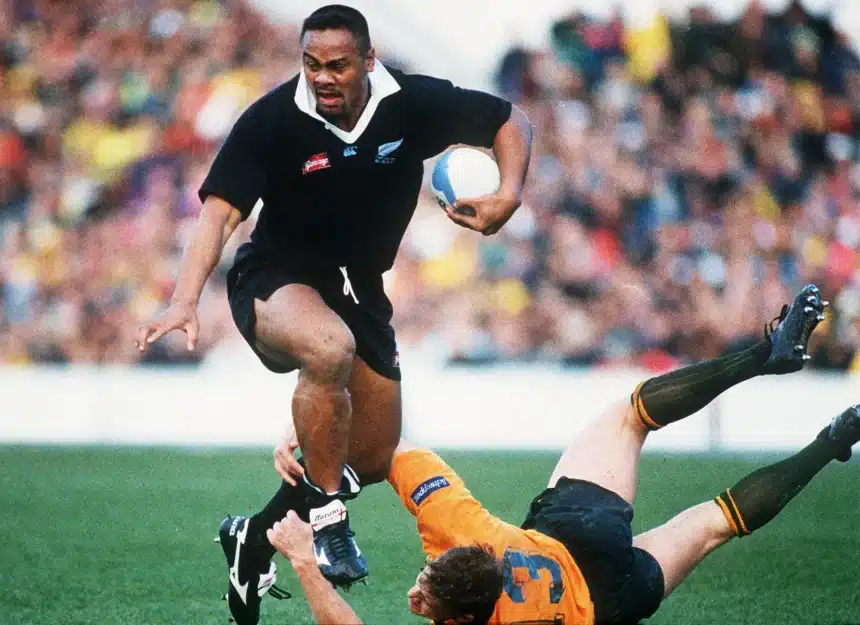

Few athletes have captured the global imagination like Jonah Lomu, the New Zealand rugby legend whose blend of brute strength and extraordinary speed revolutionised the winger position. His ability to outsprint world-class opponents, despite a frame more typical of a second-row forward, left a permanent mark on international rugby. As debates continue among fans about how Lomu’s raw pace measured against not just other rugby stars but also sprinters sponsored by giants like Nike, Adidas or Puma, the intrigue around his fabled 100m sprint time only intensifies. But how fast did Jonah Lomu truly run — and how does his athleticism resonate in today’s sports landscape?
Jonah Lomu’s 100m Sprint Time: Debunking the Myth and Revealing the Numbers
Jonah Lomu’s reputation as a winger was turbocharged by his reported 100m sprint times, which varied between 10.7 seconds and 11.2 seconds at different stages of his career. During his final year of high school, he reportedly clocked 11.2s over 100m—a time already electrifying compared to the rugby norm. Lomu would later be cited with times as fast as 10.70s, drawing comparisons to track athletes and feeding speculation among brands like Asics, New Balance, or Saucony, forever searching for crossover stars.

- School record: 11.2 seconds (100m)
- Peak estimated sprint: 10.70 seconds (100m)
- Height/Weight: 6’5″ and up to 280 pounds (127 kg), an extraordinary combo for a sprinter
- Outpaced many professional backs in international matches
| Year | Time (100m) | Context |
|---|---|---|
| High School | 11.2s | College-level athletics |
| Peak Career | 10.70-10.82s | International rugby era |
The fastest recorded times are comparable to some Olympic athletes but even more astounding given his size, placing him in a unique spot among rugby icons and top international sprint athletes. Lomu’s performances remain a point of fascination and reference for discussions on player speed in professional rugby (Bath Rugby vs Gloucester match highlights how rare such speed is at top levels).
Comparing Rugby’s Fastest: How Does Jonah Lomu Rank?
Across eras, many rugby stars have been lauded for their speed, with brands such as Reebok and Brooks taking notice when top athletes break the mould. Lomu’s 10.70s reportedly places him in elite company, ahead of most wingers and many backs in rugby history. For context:

- Lomu’s 100m times rivalled the best rugby sprinters of all time
- He outpaced not just rugby players but also set benchmarks for strength-speed athletes
- Analyses like this Top 14 review often highlight the absence of comparable players even today
| Player | 100m Time |
|---|---|
| Jonah Lomu | 10.70s |
| Bryan Habana | 10.40s |
| Carlin Isles | 10.13s |
| Tonderai Chavhanga | 10.27s |
Despite some rugby stars posting lower times, none combined Lomu’s mass and speed — a fact that continues to captivate both fans and sporting companies. Would Lomu have thrived in other sports, or even the NFL? That debate remains fierce, echoing through rugby newsrooms and sports brands to this day (see analysis: Glasgow vs Cardiff).
Legacy of Lomu’s Speed: From Sponsorships to Lasting Influence in Rugby
Lomu’s blend of size and pace not only thrilled fans but also attracted the attention of global sportswear companies. Brands like Adidas and Nike regularly sought his endorsement, capitalising on his iconic status to reach new audiences. The legacy of his extraordinary speed still inspires modern players and is often featured in performance reviews like Leinster’s dominance over Dragons.

- Major sponsors frequently used Lomu’s image in campaigns
- Younger players cite his style and pace as direct influences
- His feats are benchmarks in debates about the all-time greatest wingers
- Lomu’s speed is now part of training discussions across rugby, inspiring improved regimes echoed by brands such as Mizuno or Saucony
Lomu’s influence extends well beyond statistics. News features, like those covering players’ debut reflections or recounting classic matches, nearly always invoke his legacy as a stand-out for both rugby and athletic performance in sport overall.
What Modern Athletes Can Learn From Jonah Lomu’s 100m Feats
Lomu’s fierce commitment to pushing the boundaries continues to inspire individual athletes and teams alike. Clubs in the URC such as Leinster often cite the necessity of combining lateral speed and power, especially in the context of player development and recruitment influenced by multi-disciplinary training methods advocated by sponsors ranging from Puma to Mizuno.
- His time remains an aspirational standard for aspiring rugby wingers
- Multisport youth backgrounds—sprinting, shot put, hurdles—set precedents for elite rugby development
- Sports tech and gear are increasingly tailored for enhanced speed and durability
| Training Component | Lomu’s Practice | Adopted by Modern Teams |
|---|---|---|
| Sprint Drills | Integrated with strength work | Standardised in elite rugby academies |
| Multisport Foundation | Shot put, high jump, relay | Still recommended in talent identification |
| Speed-Endurance | Critical in Lomu’s era | Focus of modern specialised coaching |
Every season, as new stars emerge, questions re-emerge about who might next combine such physical presence and velocity. Whether scouring key URC matchups or watching highlight reels, it’s clear Lomu’s example is a touchstone for excellence in rugby and beyond.
FAQ – Jonah Lomu’s 100m Sprint Time and Impact
Lomu’s times ranged from 11.2s in high school to a peak of 10.70s during his top playing years, depending on the source.
He remains unmatched for blending such mass (over 120kg) with sub-11 second 100m sprints, ahead of nearly all wingers of his era.
While several top athletes aim to combine size and speed, Lomu’s particular blend remains rare in today’s game.