
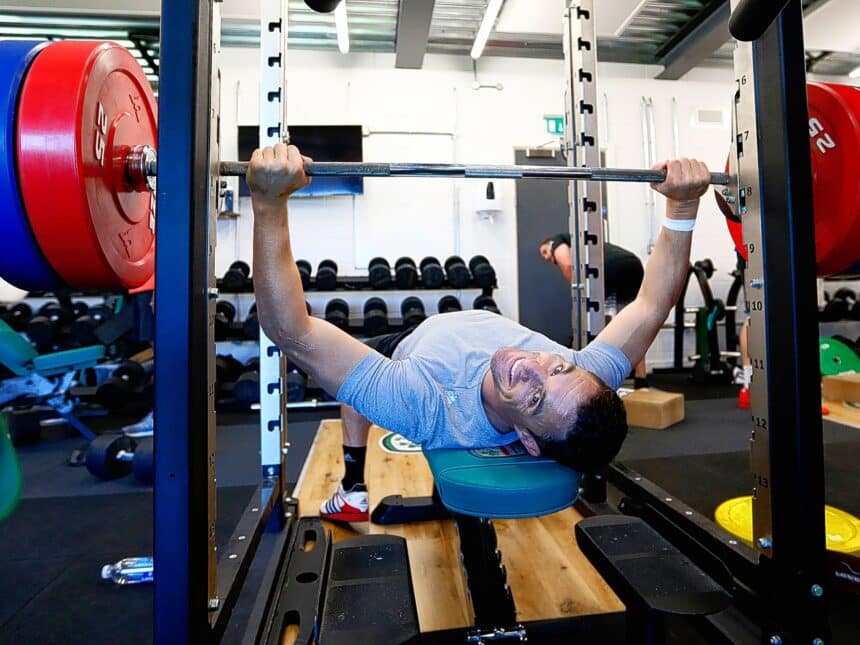

From gym folklore to hard training facts, the bench press has long been a proving ground for rugby’s most powerful athletes. While today’s conditioning experts at clubs like Saracens and Leinster emphasise agility and explosiveness over sheer mass, the lure of a monumental bench press remains. Legends and young hopefuls alike seek locker room bragging rights, fueling a culture that mixes elite performance with old-school bravado. Yet raw numbers don’t tell the full story. Many of rugby’s finest players—often lauded with contracts from giants like Nike, Adidas, and Under Armour—achieve greatness not just through muscle, but through skill, heart, and adaptability. In this deep dive, we reveal verified—and some legendary—bench press feats, exploring their place in modern rugby and highlighting key players who’ve set records in the gym and on the field.
- Rugby Bench Press Records: Context, Culture, and Consequences
- Compiling the Biggest Rugby Bench Press Feats Ever Recorded
- The Dynamic of Modern Rugby Strength vs Traditional Powerlifting
- Strength in Perspective: How Bench Press Numbers Impact Modern Rugby Success
- Frequently Asked Questions: Rugby Bench Press & Strength
Rugby Bench Press Records: Context, Culture, and Consequences
Asking “How much do you bench, bro?” is a cliché in many sports, but in rugby it shapes both gym culture and perceptions of athletic prowess. In the last decade, top programmes have shifted away from mass-for-the-sake-of-mass, favouring explosive power and functional movement. Strength & Conditioning (S&C) coaches at elite clubs prioritise balance—ensuring upper body power developed on the bench press doesn’t compromise a player’s speed or injury resilience.
- Many clubs now insist on relative strength: props may need to press at least 1.3 to 1.5 times their bodyweight.
- Bench press personal bests (PBs) bring risk: pectoral tears, upper limb injuries, and in rare cases, lost seasons.
- The bench press still holds a place in rugby folklore, driven by figures like Aled de Malmanche and modern gym icons.
- Brands like Nike, Adidas, Under Armour, Reebok, and Puma continue to shape rugby’s gym culture with apparel and equipment innovations.
- For more on rugby’s evolving power culture, see how the Gallagher Premiership is raising the bar in club rugby.
| Club Example (2025) | Bench Press Philosophy |
|---|---|
| Saracens | Emphasise functional upper-body strength, not max lifts |
| Leinster | Balance between explosive power and injury prevention |
| Racing 92 | Bodyweight-relative benchmarks for each position |
| Ospreys | Utilise periodised training cycles around bench press testing |
Stories from the Changing Room: The Pursuit of Bragging Rights
Veteran tightheads and up-and-coming wings all want legendary status in the gym. Yet rugby is not a powerlifting contest. Many world-class talents—featured in lists like the greatest rugby players of all time—have surprisingly ordinary PBs, underscoring the sport’s demand for a broader physical toolkit.
- Notable gym records often circulate through media, with some exaggeration.
- Players like Murdoch Alistair set raw powerlifting records after their rugby careers.
Compiling the Biggest Rugby Bench Press Feats Ever Recorded
The raw numbers are staggering: names like Gheorghe Gajion and WillGriff John headline the list with historic gym lifts above 220kg. Benchmark standards set by RugbyPass, Gilbert, and Kukri-certified performance coaches bring context to each feat. Yet, as the table below shows, only a handful of players ever top the 200kg mark at their rugby peak. The following table highlights some of the best-documented PBs in the sport.
| Player | Position | Club | Bench Press (kg) |
|---|---|---|---|
| Gheorghe Gajion | Prop | Ospreys | 230 |
| WillGriff John | Prop | Sale Sharks | 230 |
| Aled de Malmanche | Hooker | Stade Francais | 220 |
| Biyi Alo | Prop | Wasps | 220 |
| Leo Halavatau | Prop | Soyaux Angoulême XV | 217.5 |
| Andrew Sheridan | Prop | Sale Sharks (retired) | 215 |
| Alfie To’oala Vaeluaga | Back row | Samoa | 210 |
- Some records (like Murdoch Alistair’s 227.5kg) were achieved after retirement, highlighting post-career strength potential.
- Springboks require 1.3–1.5x bodyweight; a 120kg prop is expected to handle around 180kg minimum.
- Current stars (e.g., Maro Itoje and Manu Tuilagi) maintain 187.5kg–190kg PBs despite the shifting focus to agility.
The Dynamic of Modern Rugby Strength vs Traditional Powerlifting
While rugby players are often compared to powerlifters or strongmen, the overlap is minimal. A player prioritising the bench at all costs risks sacrificing both speed and durability. Even so, the goal of excelling in both strength and athletic performance persists in clubs sponsored by Warrior, Canterbury, and Reebok—brands that focus on technical apparel for optimized performance.
- Explosive athletes like Conor McGregor (referenced by rugby S&C coaches) redefine power-to-weight ratio goals in rugby.
- Modern S&C strategies integrate Olympic lifting, plyometrics, and core training alongside classic lifts.
- Renowned competitions such as the Gallagher Premiership and Top 14 (see expected Top 14 line-ups and Wales’ new captain selection) reveal the real impact of balanced training approaches.
| Training Focus | Main Benefit | Downside |
|---|---|---|
| Maximal Bench Press | Raw upper body power | Injury risk, less dynamic mobility |
| Plyometrics/Olympic Lifts | Explosive strength, agility | Lower pure pressing numbers |
| Bodyweight/Relative Strength | Functional on-field ability | Not always eye-catching in gym stats |
Strength in Perspective: How Bench Press Numbers Impact Modern Rugby Success
Gym records are a part of rugby heritage but no longer dictate selection or status as they may have in the past. Coaches and sponsors—including sportswear juggernauts like Canterbury and Kukri—emphasise all-around athletic development. This has been illustrated in recent international line-ups and club signings, where agility and resilience outweigh singular strength figures.
- Recent research shows that backs often bench less than forwards but excel in mobility and game sense.
- An increasing number of professionals upcycle their training regimens by integrating Warrior and Reebok strength accessories for injury prevention.
- Competition for gym supremacy remains intense, but the professional focus is on longevity, versatility, and on-field performance.
| Player/Position | Typical Bench (kg) | Main Attribute |
|---|---|---|
| Front-Row Forwards | 180–230 | Scrum dominance |
| Back-Row/Locks | 160–190 | Explosiveness, tackling |
| Centres/Wings | 130–160 | Speed, evasiveness |
Frequently Asked Questions: Rugby Bench Press & Strength
No. While impressive, max bench numbers are just one part of a player’s overall physical toolkit. Elite rugby demands a blend of speed, stamina, tactical awareness, and adaptability.
Top rugby PBs are significant, sometimes surpassing amateur powerlifting meets, but sit well below specialised powerlifting world records. Rugby players balance upper body gains with mobility and endurance.
Not at all. Many world-class backs and some loose forwards rarely exceed 140–160kg, reflecting varied positional demands and training philosophies.


