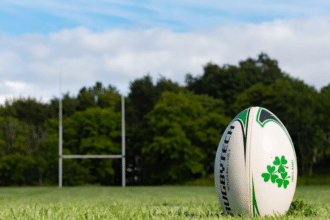
From packed stadiums in Auckland to grassroots pitches in northern England, the rivalry between Rugby League and Rugby Union sparks passionate debate and fuels sporting culture. For decades, fans of Wigan Warriors, Leinster, and the All Blacks have not only followed different teams, but also distinct codes. As Rugby World Cup fever and iconic events like the Six Nations and NRL finals continue to captivate global audiences, the contrasts between these two forms of rugby command fresh relevance. Beyond the number of players or points scored, the differences shape tactics, values, and even social identities embedded in teams and communities. Let’s unravel the core divergences, blend in some sporting lore, and see why every rugby fan swears by their favourite code—even as both continue to learn from each other in 2025.
- Rugby League vs Union: Key Gameplay Differences Explained
- Field Dimensions, Ball Shape, and Scoring: Vital Code Contrasts
- Socio-Cultural Dimensions: History, Identity, and Global Growth
- Spotlight on Positions and Player Roles: Specialists vs Versatility
- Unique Features and Recent Innovations in League and Union
- FAQ: Rugby League vs Rugby Union
Rugby League vs Union: Key Gameplay Differences Explained
The split in rugby’s rules more than a century ago gave rise to two unique sports—each with its own rhythm and flow. At the heart of this division sit fundamentals like team size, scoring systems, and how the ball moves through phases of play. For instance, the Rugby Football Union insists on 15 players per team in Union, while the NRL and Super League showcase just 13 on each League side, leading to more open space and faster play.

- Union: 15 players, 8 permitted substitutions per match
- League: 13 players, 10 permitted substitutions per match
This difference means Union’s larger squads often emphasize physical contests (like scrums and lineouts), whereas League’s smaller teams create wider gaps, promoting speed and agility. Possession rules are also at odds—Union allows teams to retain the ball through as many “phases” as they can keep control, a reality that those who follow Bath Rugby or Leinster often see in protracted, high-tension passages. By contrast, League ensures turnovers: each team gets six tackles before play switches, keeping the action brisk and relentless.
| Feature | Rugby Union | Rugby League |
|---|---|---|
| Players per team | 15 | 13 |
| Substitutions | 8 | 10 |
| Possession | Unlimited phases | 6-tackle rule |
| Common competitions | Six Nations, Premiership, Rugby World Cup | NRL, Super League, International Rugby League |
These distinctive differences make cross-code matches—like the famous dual encounters between Bath Rugby and Wigan Warriors—an intriguing, albeit rare, spectacle in world sport.
What Happens After the Tackle? Contest vs Continuity
The aftermath of a tackle marks a defining line in how each sport is experienced, both for players and fans. In Union, a tackled player must release the ball instantly—triggering dynamic contests like rucks and mauls, where forwards jostle to win back possession. This phase is where teams like the All Blacks have built global legends, often overwhelming the opposition with relentless, skillful contest for the ball.
- Rucks and mauls allow for turnovers and tactical battles in Union
- In League, a “play-the-ball” replaces rucks: after each tackle, the ball is simply rolled backward to resume attack
- Scrums exist in both, but are largely competitive in Union and mostly ceremonial in League
| Situation | Union | League |
|---|---|---|
| After tackle | Release ball, contest via ruck/maul | Play-the-ball, defence resets |
| Scrum | Highly contested, strategic | Quick, little contestation |
| Lineout | Key set-piece for restarts | Does not exist |
In 2025, with both codes fine-tuning their laws to attract new participants and simplify for TV audiences, Union’s set-pieces and League’s tempo remain ever-contrasted touchstones of their sporting DNA.

Field Dimensions, Ball Shape, and Scoring: Vital Code Contrasts
While Union and League pitches overlap in some stadiums (like the famed Headingley, shared by both Leeds rugby sides), the field dimensions and even the ball’s design reflect subtle but influential distinctions. A Union pitch can stretch up to 144 meters long and 70 meters wide—sometimes giving a home advantage for teams like Leinster, famed for their tactical kicking. League fields are a bit more compact (max 122 x 68 meters), dovetailing with that code’s quick plays.
- Union ball: rounder, slightly larger, easier for tactical kicking
- League ball: more streamlined and pointed for swift hand-passing
| Feature | Union | League |
|---|---|---|
| Pitch length | 106–144m | 112–122m |
| Pitch width | 68–70m | 68m |
| Lineout | Yes | No |
Scoring systems illuminate each sport’s philosophy. In Union, a try brings 5 points, conversions 2, penalty goals 3, and drop goals also 3. For League, a try delivers 4 points, and conversions or penalty goals fetch 2—with just a single point for a drop goal (except certain extra-long kicks). The importance placed on tries in League mirrors the sport’s bias toward open, attacking rugby—contrasted by Union’s tradition of strategic penalty and drop goals, a factor crucial in high-stakes Rugby World Cup clashes.
- Union: Emphasizes territorial pressure and set-piece poise
- League: Rewards direct, sustained attack
Interested in the nuance of penalty tries? Explore this comprehensive guide on Penalty Try Rules in Rugby.
International Competitions and Culture: Rugby’s Influence Worldwide
Global tournaments showcase both the shared heritage and the enduring dichotomy between the codes. The Six Nations and Rugby World Cup stand as Union’s showpiece events, revered throughout Europe and the Southern Hemisphere. Meanwhile, the Rugby League World Cup and Four Nations are the banner stages for League’s star teams and players. It’s not just about the silverware: competitions like the NRL and Super League have shaped League’s identity just as much as the Rugby Football Union’s stewardship has influenced Union’s global spread.
- Six Nations: The oldest international Union tournament, spanning England, Ireland, Scotland, Wales, France, and Italy
- NRL: League’s strongest domestic competition, centered in Australia and New Zealand
- Super League: Premier League competition for European rugby league teams
- Rugby World Cup: The highlight event of Union, celebrating global rivalries like the All Blacks vs. Springboks
- International Rugby League: Governs competitions and World Cup events for the League code
| Competition | Union | League |
|---|---|---|
| World Cup | First held 1987 | First held 1954 |
| Big domestic league | Top 14, Premiership, URC | NRL, Super League |
| Olympics/Sevens | Yes (since 2016, Rugby Sevens) | League Nines World Cup (since 2019) |
If you want more on recent Super Rugby developments, don’t miss this exclusive on Michael Hooper’s excitement or Frans Steyn’s insight about the competition’s evolution.
Socio-Cultural Dimensions: History, Identity, and Global Growth
Tracing rugby’s history reveals as much about society as about sport. The 1895 split that gave rise to League was as much a class issue as a rule divide, with League thriving in working-class communities, particularly in northern England and parts of Australia. Union, nurtured by the Rugby Football Union, retained its reputation as an establishment sport, prominent in public schools and global hotspots like New Zealand and South Africa. As of 2025, Union’s participant base remains broader, with robust growth in France, Ireland, and among women’s and youth teams.
- In England: Union = upper/middle class, League = working class
- In France: “Rugby à treize” (13) vs “Rugby à quinze” (15), each with deep regional roots
- In Australia: School background often guides code allegiance
| Country/Region | Popular Code | Iconic Teams |
|---|---|---|
| UK (North) | League | Wigan Warriors |
| New Zealand | Union | All Blacks |
| Australia (NSW, QLD) | League | NRL clubs |
| France | Both, regionally divided | Top 14, local XIII/XV teams |
Dramatic shifts in recent years—like the Rugby Football Union’s policy changes (see recent debate on gender participation) and the IRFU’s updates—underline how the sport now reflects broader questions of identity and inclusion, beyond the pitch itself.
Spotlight on Positions and Player Roles: Specialists vs Versatility
Another point of divergence is the number and specialization of positions. Union teams feature more specialized roles—like flankers and number eights—requiring distinct body types and skills, especially for scrummaging and lineout jumping. In League, with no lineouts and simplified scrummaging, players often display greater versatility, with many forwards expected to handle the ball as energetically as backs.
- Union: 8 forwards (props, hooker, locks, flankers, number 8) and 7 backs
- League: Forwards (props, hooker, second row, lock) and 7 backs (split differently)
- Some names overlap, but tactical use and requirements differ
| Position Name | Union Role | League Role |
|---|---|---|
| Prop | Scrummaging, physicality | Direct running, ball handling |
| Scrum-half | Directs forwards, quick service | Hooker often fills this role |
| Flanker | Breakdown, open play, defense | Position not used |
| Lock/Second Row | Lineouts, jumpers, tight play | More mobile, attacking threat |
These differences have enabled some high-profile switches between codes, such as All Blacks legends crossing into League, and vice versa, as new commercial and career opportunities arise post-professionalism.
For insight into player development, check out the focus on nurturing Ulster Rugby’s future with James Topping or the latest signings at Newcastle Falcons.
Unique Features and Recent Innovations in League and Union
Every season, both codes tweak their regulations in search of greater entertainment and fairness. Rugby league, ever in pursuit of speed, has tested variations like golden point for tied games, high tackle penalties, and expanded video review systems—especially visible in major NRL clashes. Union, striving for clarity, continues to review its breakdown and offside laws, with recent years seeing “50:22” kick rules and adjustments to penalty try awards.
- Video referee technology first introduced in League (1996), Union followed (2001)
- “Sin bin” time penalties, pioneered in League (1980), later adopted in Union
- Union’s evolving penalty try rules—get up to speed here
- League allowing deliberate ball out-of-play actions in some instances
| Innovation | First in League | First in Union |
|---|---|---|
| Video referee | 1996 | 2001 |
| Sin bin | 1980 | 2001 (formalized) |
| Golden point | Yes (NRL) | No |
The capacity for adaptation keeps both sports fresh, as does their openness to cross-code matches and even hybrid “compromise rules” games—like the 2024 tribute match uniting stars from both codes in Leeds.
For a fresh perspective on top-level preparation for major events, see how Nienaber is already shaping the Springboks’ approach for the next Rugby World Cup at this link.
FAQ: Rugby League vs Rugby Union
- Can players switch between Rugby League and Union?
Yes, many top athletes have played both codes—either at the club level or internationally. Notables include Jason Robinson and Sonny Bill Williams, who both excelled after switching. - Which sport has a wider global reach?
Rugby Union, thanks to the Rugby World Cup and Six Nations, is played in more countries. League dominates in Australia, New Zealand, and some parts of the UK and France. - Why was the original split between League and Union?
The schism in 1895 was mainly due to disagreements over professionalism and pay for working-class players, leading to the formation of League in Northern England. - Are there major differences in scoring?
Yes. Tries are worth more in Union (5 vs 4), while penalty and drop goals also have higher values compared to League. - What’s the difference in how games restart after the ball goes out of play?
Union employs lineouts—a set-piece with lifting and jumping—while League mostly uses a quick scrum to restart, keeping play rapid.