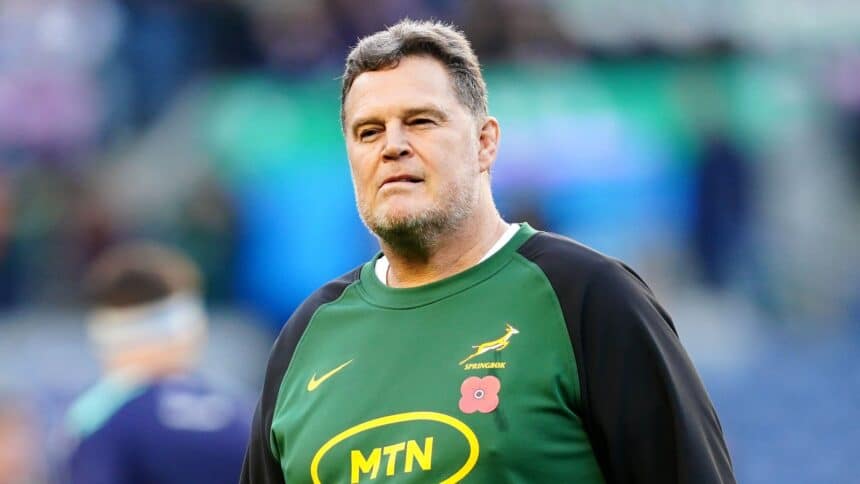

Rugby’s evolution has been shaped as much by visionary coaches as by legendary players. From inventing new tactics to building dynasties, the men who have paced the sidelines have forever altered the sport’s destiny. Today, their legacies lift entire nations, inspire new generations, and set the benchmark for what it means to lead. This ranking of the best rugby coaches of all time digs into ten game-changers whose influence extends far beyond the final whistle—leaders who repeatedly defied expectations, embraced innovation, and left an unmistakable imprint on rugby’s global narrative.
Top 10 Most Influential Rugby Coaches in History
Behind every world-class rugby team stands a mastermind whose vision and strategy redefined what’s possible. This selection, based on impact, silverware, and legacy, gathers the ultimate innovators and architects of rugby greatness.
| Rank | Coach | Major Achievements | Key Teams | Famous For |
|---|---|---|---|---|
| 1 | Rassie Erasmus | World Cup wins (2019, 2023), Rugby Championship | South Africa | Turnarounds, tactical evolution |
| 2 | Steve Hansen | World Cup win (2015), 87% test win rate | New Zealand All Blacks | Player empowerment, innovation |
| 3 | Graham Henry | World Cup win (2011), Grand Slam (Wales) | New Zealand, Wales, British & Irish Lions | Team rebuilding, motivation |
| 4 | Sir Clive Woodward | World Cup win (2003), Grand Slam (2003), Lions Tour | England, British & Irish Lions | Sports science, detail |
| 5 | Jake White | World Cup win (2007), Tri-Nations | South Africa | Talent spotting, structured play |
| 6 | Rod Macqueen | World Cup win (1999), multiple Bledisloe Cups | Australia | Modernisation, system building |
| 7 | Ian McGeechan | Multiple Lions series wins, Scotland Grand Slam | Scotland, British & Irish Lions, Wasps | Lions spirit, tactical ingenuity |
| 8 | Kitch Christie | World Cup win (1995), unbeaten as Bok coach | South Africa | Unity, man-management |
| 9 | Warren Gatland | 4 Six Nations, 3 Grand Slams, Lions series win | Wales, British & Irish Lions | Resurrections, consistency |
| 10 | Eddie Jones | World Cup finals (2003, 2019), famous upsets | Australia, England, Japan | Tactical surprises, adaptability |
- Every coach on this list transformed not only teams, but how rugby is played or seen in their country.
- Strategic masterminds like Sir Clive Woodward and Graham Henry used sports science and psychology to give their sides an edge.
- Innovators like Rod Macqueen helped bridge the professional era, while tough motivators like Kitch Christie built unity where there was division.
For deeper insights into recent coaching moves, see how Munster lost two key coaches in 2024 and how top sides regularly face staff turnover.
The Tactical Revolutionaries: Changing Rugby’s DNA
Some coaches didn’t just win—they changed the way rugby is played. Visionaries like Bob Dwyer, instrumental in Australia’s first World Cup win, and Bill McLaren, whose tactical analysis as both coach and commentator shaped generations, are essential to any discussion of influence—even if success wasn’t always measured solely in trophies. Nick Mallett‘s tenure with South Africa, including a record 17 straight wins, showcased another blueprint for sustained dominance, while Marcello Loffreda made Argentina a world force with his historic 2007 campaign.

- Bob Dwyer: Developed Australian attacking ethos.
- Bill McLaren: Elevated rugby analysis and public understanding.
- Marcello Loffreda: Led Argentina’s shock 2007 charge to World Cup bronze.
- Nick Mallett: Known for tactical depth and discipline.
| Coach | Signature Tactic or Legacy | Notable Impact |
|---|---|---|
| Bob Dwyer | Attacking lines, offloading game | Australia’s 1991 World Cup win |
| Bill McLaren | Tactical broadcasting, coaching insight | Educated millions on rugby theory |
| Marcello Loffreda | Defensive structure, counter-attack | Argentina’s first World Cup medal |
| Nick Mallett | Formidable defense, unity | Record Bok winning streak |
- Innovation isn’t only reserved for the winners, but for those who make the game richer.
- Understanding tactical advancements like the 50:22 rule is crucial for today’s coaches striving to emulate the greats.
Reflecting on these trailblazers helps explain why rugby’s tactics and team cultures are so diverse and competitive in 2025.
Dynasty Builders: Hallmarks of a Legendary Rugby Coach
The creation of a dynasty relies on more than winning matches—it’s about sustainable systems, squad depth, and mentoring the next generation. Graham Henry and his successor Steve Hansen constructed the All Blacks’ modern era, marked by record-breaking consistency and back-to-back World Cup wins. Recent club departures echo challenges faced even by the most celebrated coaches.
- Building depth and talent identification—see Jake White launching stars like Victor Matfield.
- Adapting to evolving rules, like the 6-2 bench split pioneered in South Africa’s recent World Cup runs.
- Pioneering sports science or psychological preparation, as with Sir Clive Woodward’s approach with England between 1997–2003.
| Coach | Notable Dynasty | Legacy on Team Culture |
|---|---|---|
| Graham Henry | All Blacks (2004–2011) | Leadership pipeline for future coaches |
| Steve Hansen | All Blacks (2012–2019) | Unrivalled test success |
| Rassie Erasmus | Springboks (2018–2023) | Modern tactical revolution |
| Rod Macqueen | Wallabies late 1990s–2001 | Professional era benchmark |
- Establishing a set culture with defined values—McGeechan with the Lions.
- Continuity planning and elevation of assistant coaches.
- Legacy seen in enduring winning percentages and evolved national playing styles.
Springbok coaches’ satisfaction at 2024 training camp offers a real-time example of dynasty-building in South African rugby.
Coaching Resilience and the Art of Team Building
No coach can avoid setbacks, but the greatest rebound stronger and wiser. Eddie Jones’s career is proof—World Cup heartbreaks followed by tactical reinventions and famous upsets, from Australia to Japan to England. Warren Gatland made a habit of reviving underperforming teams, exemplified by Wales’ multiple Grand Slams after years in the wilderness.
- Overcoming adversity: Kitch Christie building unity in post-apartheid South Africa.
- Developing resilience through off-field team culture.
- Sharpening strategic focus after heavy defeats—Henry and Hansen’s response to previous All Black problems.
| Coach | Main Challenge | How They Overcame It |
|---|---|---|
| Kitch Christie | National disunity, high expectations | Built strong, single-minded team |
| Warren Gatland | Wales’ inconsistency | Focused on discipline and depth |
| Eddie Jones | Frequent criticism, early exits | Constant tactical adaptation |
Want to keep pace with the latest in rugby coaching transformation? See Harlequins coaches’ contract extensions and other long-term deals in the Gallagher Premiership, illustrating the sport’s ongoing faith in forward-thinking leadership.
FAQ: All You Need to Know About Legendary Rugby Coaches
- What makes a rugby coach great?
A combination of results, innovation, consistency over time, and the capacity to inspire both teams and nations. True greats also leave a legacy on coaching structures and rugby culture.
- Which coach has the best ever winning percentage?
Steve Hansen led the All Blacks with a phenomenal 87% win rate, making him one of the most statistically successful coaches in modern rugby.
- Why is Sir Clive Woodward considered a rugby visionary?
He pioneered the integration of technology, sports science, and psychology into coaching. His “marginal gains” philosophy led England to the 2003 World Cup triumph and continues to influence coaching approaches today.
- What are some key tactics famous coaches introduced?
Many legendary coaches pioneered tactics like the penalty try rules exploitation, the “two-pod” lineout system, and innovative bench splits, setting new standards for the game.
- How do overseas coaches impact national teams?
The globalisation of coaching, as discussed in this article on overseas coaches, has led to more cross-pollination of tactics—raising standards while reshaping national identities in rugby.