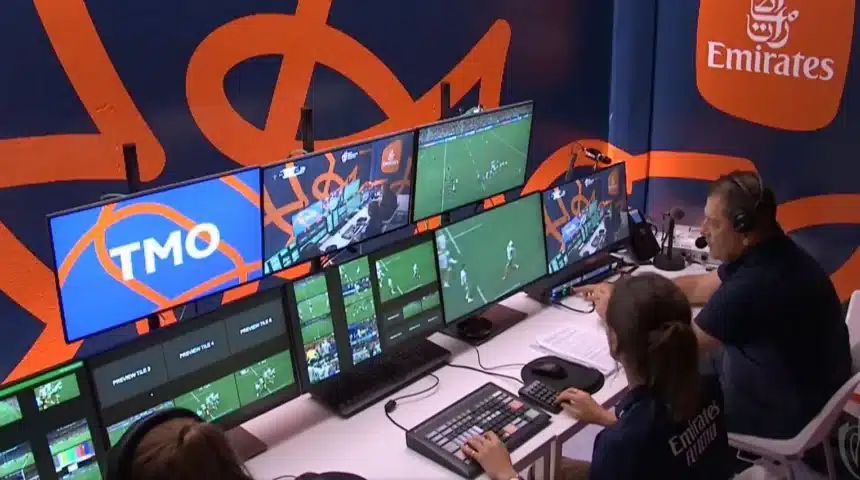

Rugby’s relationship with technology is unique and evolving, blending tradition and innovation in pursuit of fairness. While football’s Video Assistant Referee (VAR) system continues to stir heated debates around the globe, rugby has long embraced instant replay and video review under the guise of the Television Match Official (TMO). Yet, confusion lingers: does rugby use VAR—or is its video review system fundamentally different? Unpacking these distinctions offers insight into how Rugby Union and Rugby League seek to balance game flow, transparency, and accuracy for fans, referees, and players alike.
How Rugby’s Video Review Differs from Football’s VAR
The notion of Video Assistant Referee (VAR) has become synonymous with football, changing the dynamic of on-field decisions and fueling endless pub debates. In rugby, however, the Television Match Official (TMO) holds sway as the primary video technology. The TMO was introduced in Rugby League in the mid-1990s and adopted in Rugby Union from 2001, making rugby a pioneer in the use of instant replay.
- TMO reviews: Focus primarily on tries, foul play, acts of misconduct, and challenges to the scoreline, rather than minor infringements.
- VAR in football: Primarily used for goals, penalties, red cards, and mistaken identity.
- Communication: Rugby fans often hear the referee and TMO conversing, enhancing transparency—something football still struggles with.
| Technology | Sport | Review Focus | Introduced |
|---|---|---|---|
| TMO | Rugby Union/Rugby League | Grounding, foul play, in-goal actions | 2001 (Union), 1996 (League) |
| VAR | Football | Goals, red cards, penalties | 2018 |
This fundamental difference raises a key question: should rugby expand its use of VAR-style systems to match what is now standard in other top-tier sports or continue refining the established TMO model? For detailed team updates and season dynamics, explore the Top 14 championship race.
Pros and Cons: Rugby’s Cautious Approach to VAR
Unlike football, where the VAR buzz splits fans and pundits, rugby’s conservative application of video technology is more widely accepted. The TMO intervenes only when the on-field referee seeks clarification on crucial moments, preserving the match’s flow. Still, this process isn’t immune to controversy.
- Benefits: Reduced errors in try decisions, enhanced player safety, and transparent match reviews.
- Drawbacks: Occasional disruption to game rhythm, technology costs, and the potential for subjective interpretation even with video assistance.
- Fan experience: Access to referee audio and big-screen replays improves clarity but can sometimes prolong suspense.
| Benefit | Description |
|---|---|
| Accuracy | Helps referees get key decisions right, reducing wrong calls. |
| Transparency | Open communication between referee, TMO, and audience often broadcast live. |
| Game Flow Concerns | Lengthy reviews can slow play and frustrate players and spectators. |
The balance between technological oversight and the spirit of rugby remains a live debate in 2025. Clubs in Premiership Rugby and other leagues weigh the benefits of improved fairness against potential delays and escalating costs.
TMO, Instant Replay, and the Future of Rugby’s Match Review
With Rugby Union and Rugby League both showcasing the TMO, instant replay has become an established feature—even as calls grow for broader Video Assistant Referee coverage. The World Rugby Sevens Series began trialing VAR-like protocols in 2019, highlighting a shift toward real-time video decision-making across the sport’s formats. Key uses of TMO in rugby:
- Grounding and legitimacy of tries
- In-goal actions (touch, touch-in-goal, dead ball
- Kicks at goal and potential scoring infractions
- Alleged foul play (high tackles, dangerous play)
| Competition | TMO/VAR Usage | Notable Protocols |
|---|---|---|
| World Rugby Sevens | VAR trials since 2019 | On-field video reviews |
| URC | TMO standard | Comprehensive instant replay |
| Top14 | TMO and enhanced review | Audio-visual fan access |
To see evolving player roles and analytics, check out the focus on scrum-half responsibilities and profiles such as the Valentin Delpy loan in the Top 14 for case studies on how technology supports match decisions.
Comparisons with Other Sports: DRS, Hawk-Eye, and NFL Replays
Rugby’s video review system is just one part of a broader landscape. Cricket’s Decision Review System (DRS), tennis’s Hawk-Eye, and the NFL’s Instant Replay all share the goal of supporting on-field officials—each tailored to their sport’s unique demands. While DRS and Hawk-Eye rely on precision ball-tracking, rugby’s TMO blends human judgment with instant replay for events like tries, infringements, and foul play.
- DRS (Cricket): Teams can challenge field umpire calls; overturned only on clear evidence.
- Hawk-Eye (Tennis): Tracks ball trajectory; players are permitted limited incorrect challenges per set.
- NFL Instant Replay: Coach-challenged; timeouts lost if unsuccessful.
- Rugby TMO: Initiated by on-field officials for specific actions.
| Sport | System | Review Initiator | Main Focus |
|---|---|---|---|
| Rugby | TMO | Referees/Self | Try, foul play, in-goal |
| Football | VAR | VAR team/Referee | Goal, penalty, red card |
| Cricket | DRS | Teams/Umpire | Out/not out calls |
| Tennis | Hawk-Eye | Players | Ball in/out |
| American Football | Instant Replay | Coach/Referee | Scoring, possession |
These varied approaches highlight the importance of finding a system tailored to the pacing and nature of each sport. For context on fast-paced rugby variants and law variations, see Super Rugby law changes and related developments.
The Future of VAR and TMO in Rugby Union and Beyond
Written into the fabric of World Rugby, the TMO provides a backbone of fairness for major tournaments. Yet, as fan expectations rise and broadcast technology advances, voices—like those of leading coaches—call for even more transparent, faster, and efficient match review systems.
- Success of the TMO has influenced the use of video assistants across sports.
- Ongoing experiments may see blended VAR/TMO protocols for key international competitions.
- Player safety and fairness remain fundamental: both factors continue to drive innovation.
| Season | Key Innovation | Impact |
|---|---|---|
| 2022 | Enhanced audio feeds | Fans can hear ref/TMO discussions |
| 2023 | Expanded TMO powers (Top14, URC) | Greater match review scope |
| 2025 | Hybrid VAR/TMO pilot projects | Live in selected World Rugby events |
For player performance analysis and speed records, reference Cheslin Kolbe’s sprint stats, as these numbers and analytics are increasingly validated by advanced video tech in match environments.
Key Insights: Rugby’s Video Technology in Context
Rugby’s distinct embrace of instant replay through the TMO has set standards other sports now look to emulate. Still, whether the future holds true VAR integration or further TMO refinement, ongoing trials and innovations suggest rugby will keep leading the debate on balancing justice and spectacle.
- Proactive adoption shapes public perception of rugby’s officiating.
- Challenges such as game flow and subjectivity require constant calibration.
- Referees, coaches, and players remain divided on the extent of VAR—but all agree: accuracy matters.
| Stakeholder | Primary Concern | Desired Outcome |
|---|---|---|
| Referee | Consistency & authority | Robust support, minimal disruption |
| Fans | Transparency | Understandable, swift reviews |
| Players | Fairness & safety | Protection and even-handed decisions |
| Clubs | Cost & infrastructure | Efficient deployment |
To track international squad developments fueled by evolving review systems, see Pumas’ squad announcements and Flying Fijians selections across tiers of professional rugby.
FAQ: Common Questions About VAR and Video Review in Rugby
No—Rugby Union uses the Television Match Official (TMO), which operates differently from football’s VAR. However, pilot projects with VAR elements are ongoing in selected competitions.
Within prescribed areas—such as try decisions, foul play, and in-goal actions—officials can call upon the TMO, but not for every minor infraction to preserve game flow.
TMO is focused on specific aspects like tries and dangerous play, with open referee communication. VAR in football covers goals, penalties, red cards, and operates more peripherally with less transparency.
While generally smooth, complex incidents can cause delays. Organisers continually refine protocols to minimize disruption while ensuring fair results.